Hunting public land alone = Total body destruction.
Last edited by a moderator:


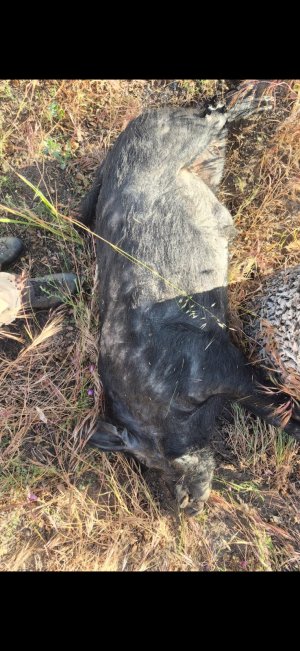
That was a shit ton of weight, and literally hell. I need to find a hunting buddy that doesn't mind being a pack mule.Awesome man !

Me and my buddy will be that for you!That was a shit ton of weight, and literally hell. I need to find a hunting buddy that doesn't mind being a pack mule.
I've taken and put guys on hundreds of pigs. I know how much work they are. But the combination of age, several surgeries, osteo and rheumatoid arthritis has caught up to me. Beasts that size are nothing short of hell now. If I could only find them next to a road.Those pigs are brutal especially if you arent prepared to deal with one that size.
Congrats!
Lose lips sink ships.Me and my buddy will be that for you!
I’ve learned a lot from your post over the years…might as well just drop the pin in my DMsLose lips sink ships.

Then I've done more than my part, happily. I'm sure you know, good public land spots are difficult to come by. But super easy to blow out. This spot in nothing but work, without killing anything. And an animal to the mix, and you'll be tested, in many ways. I have a couple guys I hunt with, but like most, they can't always get out there when I want to go. Don't get me wrong, I enjoy hunting alone, I'm just more effective hunting alone. But once I pull the trigger, at least at my age now, I want someone there to share the misery with. But spot burning is real, and I've gotten very selective about who I'll hint with, and moreso about who I'll introduce to a spot I hunt.I’ve learned a lot from your post over the years…might as well just drop the pin in my DMs
I hear ya. I share my spots with my two hunting buddies and that’s it!Then I've done more than my part, happily. I'm sure you know, good public land spots are difficult to come by. But super easy to blow out. This spot in nothing but work, without killing anything. And an animal to the mix, and you'll be tested, in many ways. I have a couple guys I hunt with, but like most, they can't always get out there when I want to go. Don't get me wrong, I enjoy hunting alone, I'm just more effective hunting alone. But once I pull the trigger, at least at my age now, I want someone there to share the misery with. But spot burning is real, and I've gotten very selective about who I'll hint with, and moreso about who I'll introduce to a spot I hunt.

This has been a really good Spring for pigs. I have not noticed a difference in old or young pigs, when it comes to edibility/tenderness. It's all in processing, and I brine soak them.Part of the 2% club! well done. Got to shoot the young ones- they are lighter and taste better.
You still in N. CA or down south?
This has been a really good Spring for pigs. I have not noticed a difference in old or young pigs, when it comes to edibility/tenderness. It's all in processing, and I brine soak them.
The young ones sure do carry easier in the pack, once boned out.
I'm in southern Ca.

I'll give you a more complete answer. Pigs are polyestrous. Meaning they are capable of cycling into heat continuously. But keep in mind that just because they are capable, does not mean they will. Their environmental conditions need to be favorable for supporting babies, in addition to their own life. Humans are also polyestrous, but hard core female athletes stop cycling (their peroid stops) due to the bodies perception of a poor environment (meaning all food was being utilized to sustain the body, with nothing left over to support life in the womb).Great work! What do you think is causing such a great spring? Good public water?


